The municipality has an old wastewater lift station. Pumps are advancing towards the end of their useful life, while controls need to be modernized and the access hatch should be replaced. Yet the concrete wet well remains robust and solid.
Should the entire station be demolished and rebuilt? Not necessarily. The most important question is whether the existing infrastructure can support a modern pumping system, without compromising availability, reliability or future capacity.
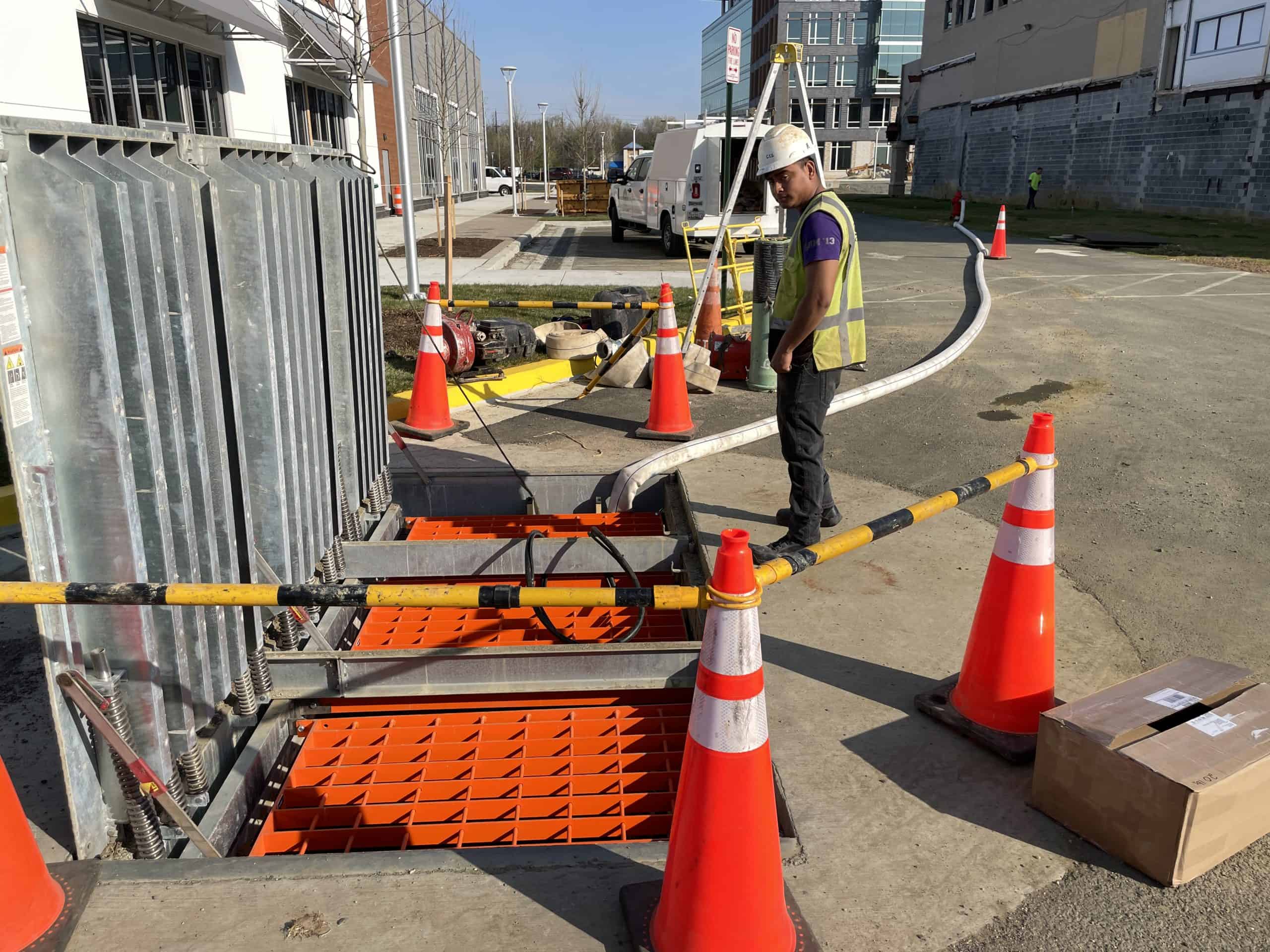
Image credit: romtecutilities.com
Retrofitting a pump station could be a great way to save infrastructure and replace components which are no longer in use.
Begin with the structure that isn’t being replaced by anyone.
Wet wells are usually the most expensive and difficult element to replace because they are submerged and linked to pipes that are already in place, and vital to wastewater collection.
Retaining a concrete construction which is still functional could reduce the excavation and construction.
However, damage to the access hatch may complicate the process. Romtec Utilities identifies wet well hatch replacement as a standard retrofit requirement. Instead of affixing a fresh hatch to a damaged concrete structure or replacing the entire top layer could make a more robust solution. This technique can be utilized to increase accessibility and enhance the functionality of the structure, without the need for rebuilding the entire wet well.
An improved pump can alter the way engineers work.
Imagine that the area of residence has increased significantly since the original lift station installation. It could be that the existing pumps are no longer sufficient to handle the increasing the flow of wastewater.
The improvement of a pumping system may include higher-horsepower equipment, but it is not possible to do this without considering the surrounding system. Higher horsepower pumps might require adjustments to elbows for discharge, pipes valves, electrical controls and other elements.
Engineers must also consider the system’s hydraulic requirements, including flow and total dynamic head. A larger pump before evaluating the conditions can cause more problems than it resolves. Making plans for future capacity prior to designing the initial design makes expansion later much easier.
Keep waste water moving during construction
Retrofitting a wastewater pump station can present a new challenge. Unlike other equipment replacement projects, the station will have to remain operational during construction.
Contractors are still working, and the wastewater will continue to flow. According to the report it is possible that a temporary bypass pumping system might be required to ensure service is maintained as the equipment that is in use is removed or new components installed.
Romtec Utilities tackled this type of issue at the Federal Law Enforcement Training Center in Brunswick, Georgia.
The project required replacing two older wastewater lifting stations, and maintaining the operation at the facility. Specific engineering for the site as well as packaged systems and bypass pumping techniques allowed for the existing station footprints as well as operational needs. This example shows the need to be aware of construction sequencing before the construction process starts.
When Replacement Becomes the Better Choice
Not all stations are suitable to be renovated. A severely deteriorated wet well, inadequate structural capacity, or major changes in hydraulic requirements may make sewer lift station replacement more appropriate than modifying the existing installation.
It is crucial that the decision made takes into account structural conditions as well as equipment compatibility and accessibility to construction, as in the long-term requirements for operation. Romtec Utilities begins retrofits and replacements by identifying elements which are expected to stay and the ones that require replacement.
The company then develops engineering solutions that are specific to the location, initial plans as well as budget estimations. Prefabricated components are also able to help facilitate installation and cut down on construction-related requirements on site.
The Project Isn’t Finished When the Pumps Get Started
Modernized lift stations must be operated as a system in one. Before returning a lift facility to normal service, restart tests, commissioning and testing of equipment is required to make sure that all pumps, controls, and the related equipment function in accordance with the specifications.
Manuals for operation and maintenance and training for operators, are important. Prior to taking over the responsibility of the station, personnel responsible for maintenance must know about the latest equipment, procedures and also the documents.
Retrofitting successfully preserves structures that are still useful while addressing the limitations that forced modernization.
Municipalities and facility owners must think beyond repairs that are immediate. The strongest project is one that integrates new equipment with existing structures, maintains essential service throughout construction, and prepares the pumping system to last for years of continual operation.