A lift station may eventually be transformed into a concrete structure filled with pumps, piping control valves and electrical equipment, but the performance of the structure is established earlier. The structure is influenced by a variety of variables, including flow calculations, site elevation, system pressure, the properties of wastewater the peak conditions access to maintenance controls and future capacity.
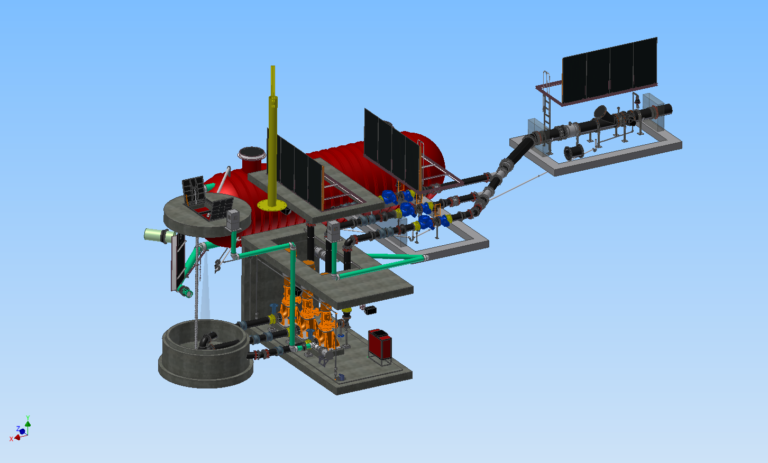
Image credit: romtecutilities.com
For project owners comparing the best lift station designers, the more useful question isn’t simply who can specify pumps. Who is able to translate the site’s conditions into a comprehensive, practical system that is easy to maintain, install, and maintain?
Gravity Has Limits
Gravity is typically the most efficient method to move wastewater however, terrain and development patterns don’t always cooperate. It’s possible that new industrial, residential and commercial properties are too in the air, too far away or situated in areas where gravity sewer expansion isn’t feasible.
The lift station is the system that carries the wastewater to the next location for collection. However, the design process requires a thorough understanding of the operation of a typical system in addition to less favourable scenarios like peak flows, maintenance of pumps, equipment malfunctions or upcoming increases in demands.
Companies that are regarded as among the top wastewater engineers should therefore consider the entire conveyance problem rather than treating the station as a separate piece of equipment.
Existing Infrastructure Complicates the Puzzle
New construction isn’t the only challenge. Municipalities frequently need to retrofit or replace old stations while keeping essential wastewater infrastructure in place.
Existing infrastructure, including wet wells and control systems, force mains site boundaries, downstream infrastructure, may limit the design. Engineers must decide what is able to be left in place, what will require replacement and how the new elements are to be incorporated into the current system.
Romtec Utilities has experience in commercial, commercial, and private applications as in retrofit and replacement projects. This enables pumping systems be adapted to the owner and operation requirements of every project.
Stormwater has different rules
The most skilled stormwater system engineers should use the provided search terms to solve an issue with a different hydrologic. Stormwater systems can experience dramatic variations in volume, based on the quantity of rain, drainage area detention capacity, and allowable discharge rates.
A station serving a detention basin, for instance could require holding runoff for a while and then pump it away at a controlled rate. Engineers must take into consideration the flow, head conditions, environmental requirements, flood-management objectives as well as the features of the drainage system for which they are receiving.
Prefabrication is a way to move work from the jobsite
The difficulty of field assembly may cause delays in scheduling, mistakes during installation, change orders, and even delays. Romtec Utilities prefabricates equipment before it reaches project sites.
In a controlled area where there is a controlled environment, the completion of more assembly work and quality-control work can cut down on construction in the field. In accordance with the plan approach explained by Romtec Utilities, certain projects that might otherwise require weeks of work can be reduced to just a few days depending on project conditions.
A commitment to the success of engineering includes commissioning
It’s not enough just to have all the components installed to be considered a reliable one. Romtec Utilities provides installation advisors and also follows up on construction with startup controls, check-points on the control panel pumps, pump operation, system testing, and staff training. The documentation is also available for operators to help them understand how to keep the system running and also to consider expansion plans in the future.
For owners searching for the best lift station designers, that final phase deserves to be considered. The best engineering will produce more than a good set of drawings. The proprietor must be left with a system that works and well-trained staff, as well as helpful documentation, and equipment that is built to meet the everyday working conditions of the facility.